
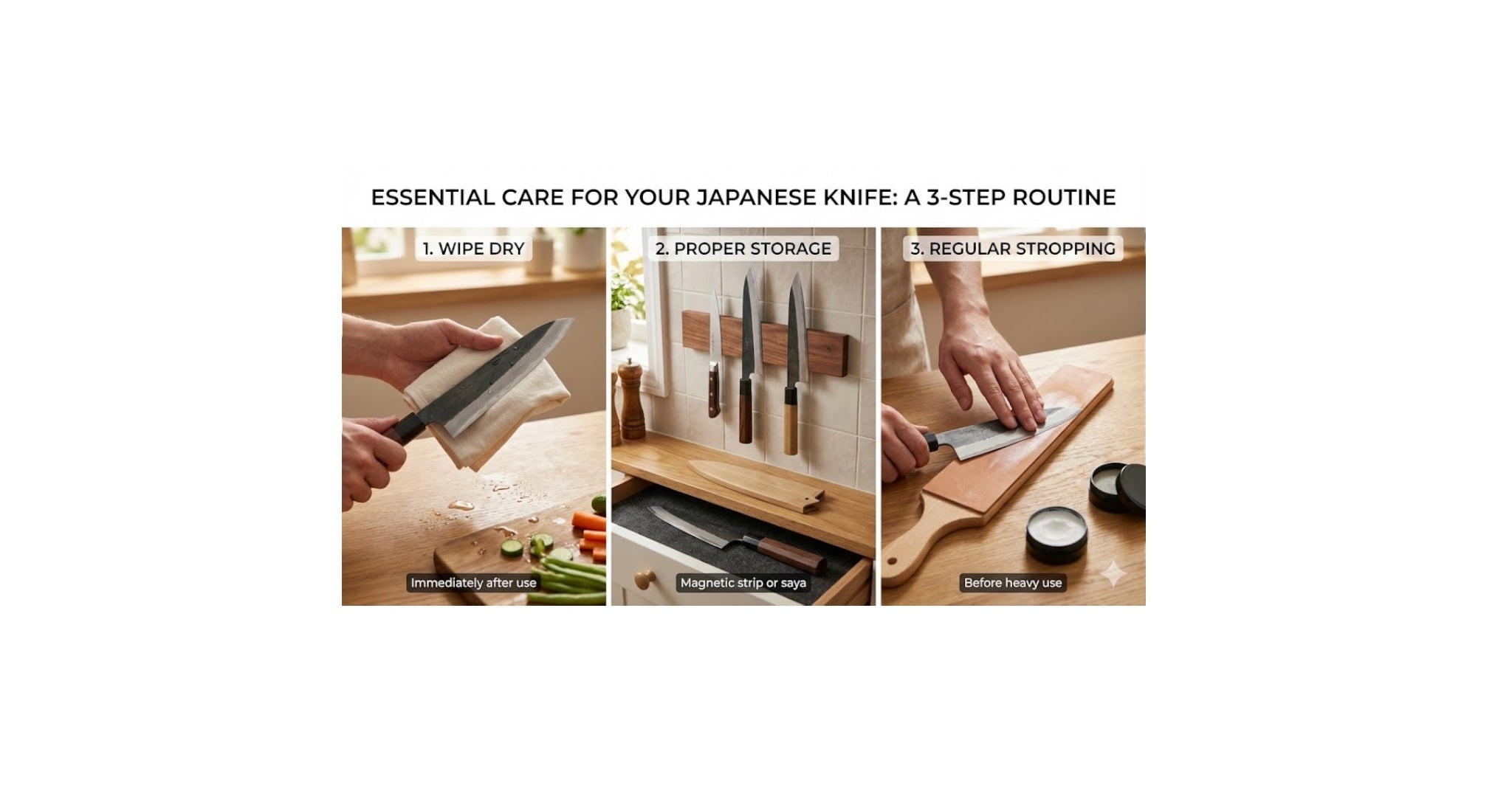
Cuidados esenciales para su cuchillo japonés: rutina de 3 pasos (guía en vídeo)
Ha invertido en una pieza de artesanía japonesa, quizá un Moritaka con un filo extraordinario o un Takamura de hoja muy fina. ¿Cómo puede conseguir que dure toda la vida?
A muchas personas les intimida el acero de alto contenido en carbono porque temen que se oxide de un día para otro. Lo cierto es que mantener un cuchillo japonés no exige conocimientos de metalurgia: basta con seguir una rutina sencilla.
En esta colaboración en vídeo con Franki Alo, explicamos tres hábitos esenciales para conservar la hoja limpia, afilada y sin óxido.
1. La regla de oro: séquelo
El principal enemigo del acero japonés, especialmente del acero al carbono, es la humedad. A diferencia de los cuchillos de acero inoxidable a los que quizá esté acostumbrado, las hojas con alto contenido en carbono pueden oxidarse si permanecen mojadas incluso durante unos minutos.
- La rutina: Mantenga un paño exclusivo para el cuchillo junto a la tabla de cortar.
- La técnica: Después de cortar alimentos ácidos, como limones, cebollas o tomates, seque inmediatamente la hoja.
- Consejo de seguridad: Limpie siempre desde el lomo hacia el filo, o coloque el paño plano y pase la hoja sobre él. Nunca deslice la mano a lo largo del filo.
Nota: Si observa un cambio de color en la hoja, no se alarme. Probablemente sea una «pátina», una capa protectora natural que se forma en el acero al carbono. El óxido es naranja o rojizo y áspero; la pátina es gris o azulada y lisa.
2. Almacenamiento: proteja el filo
Nunca guarde su cuchillo japonés suelto en un cajón. El acero duro puede ser frágil, por lo que la hoja podría mellarse al golpear otros utensilios metálicos.
Soluciones de almacenamiento recomendadas:
- Barra magnética: Nuestro método favorito. Mantiene el cuchillo seco, permite lucir la hoja y evita que el filo toque otros objetos.
- Bloque para cuchillos: Una opción clásica, pero asegúrese de que las ranuras sean lo bastante anchas para que la hoja no quede atrapada.
- Protector de hoja (saya): Si debe guardar el cuchillo en un cajón, utilice una saya de madera o un protector de plástico forrado con fieltro. Así protegerá tanto el filo como sus dedos.
3. Mantenimiento: asentado frente a chaira
No es necesario utilizar una piedra de afilar cada semana. Para conservar un filo muy agudo entre sesiones de afilado, recomendamos el asentado.
- ¿Por qué usar un asentador? Un asentador de cuero realinea los «dientes» microscópicos del filo sin retirar una cantidad significativa de metal. Es más suave que una chaira de acero, que puede resultar demasiado agresiva para los duros aceros japoneses.
- ¿Con qué frecuencia? Puede asentar el cuchillo antes de una sesión intensa de cocina. Solo lleva 30 segundos y ayuda a que el cuchillo mantenga durante meses una sensación de filo renovado.
¿Necesita reparar un cuchillo oxidado?
Si olvidó secarlo y encontró manchas naranjas, no se preocupe. Consulte la segunda parte de nuestra serie, donde explicamos cómo eliminar el óxido y forzar una pátina.
Compre el equipo:


Dejar un comentario
Este sitio está protegido por hCaptcha y se aplican la Política de privacidad de hCaptcha y los Términos del servicio.