Shotaro Imai: A Japanese Blacksmith in Echizen
This profile is based on answers provided directly by Shotaro Imai to Tokushu Knife. It is a primary-source account of his background, working methods, design philosophy, and knife care advice.
Shotaro Imai works in the forge at Kamo To Uchi Hamono Co., Ltd. in Fukui Prefecture, Japan. He has spent 13 years in the knife industry, developing his craft through repeated practice, close observation, and the guidance of experienced craftspeople around him.
Imai did not begin his education in metalwork. At university, he studied pottery and was already drawn to craft and making things by hand. When he learned about a traditional-craft internship in Fukui Prefecture, he saw it as the opportunity he had been waiting for. He applied, entered the world of traditional Japanese crafts, and went on to build his career in kitchen knives.
How Shotaro Imai Learned to Make Knives
Imai has a master who taught him the overall sequence of making a knife, but very little of the detailed technique was explained step by step. His training was practical: he was told to try, he failed, and he was corrected. Each failure created a new question—why did that happen?—and he learned the answer from the craftspeople around him, building his skills one lesson at a time.
He is especially grateful to Mr. Ikeda of Adachi Uchihamono and Mr. Kurosaki of Kurosaki Hamono for the help they gave him while he was developing his craft.
“Every failure made me ask why. By learning the answer from the craftspeople around me, I acquired each technique one by one.”
His Philosophy: Enjoy the Work, Then Share That Feeling
For Imai, making things has little meaning if the maker is not enjoying the process. He wants to enjoy forging knives first, then communicate that energy and appeal to the people who use them.
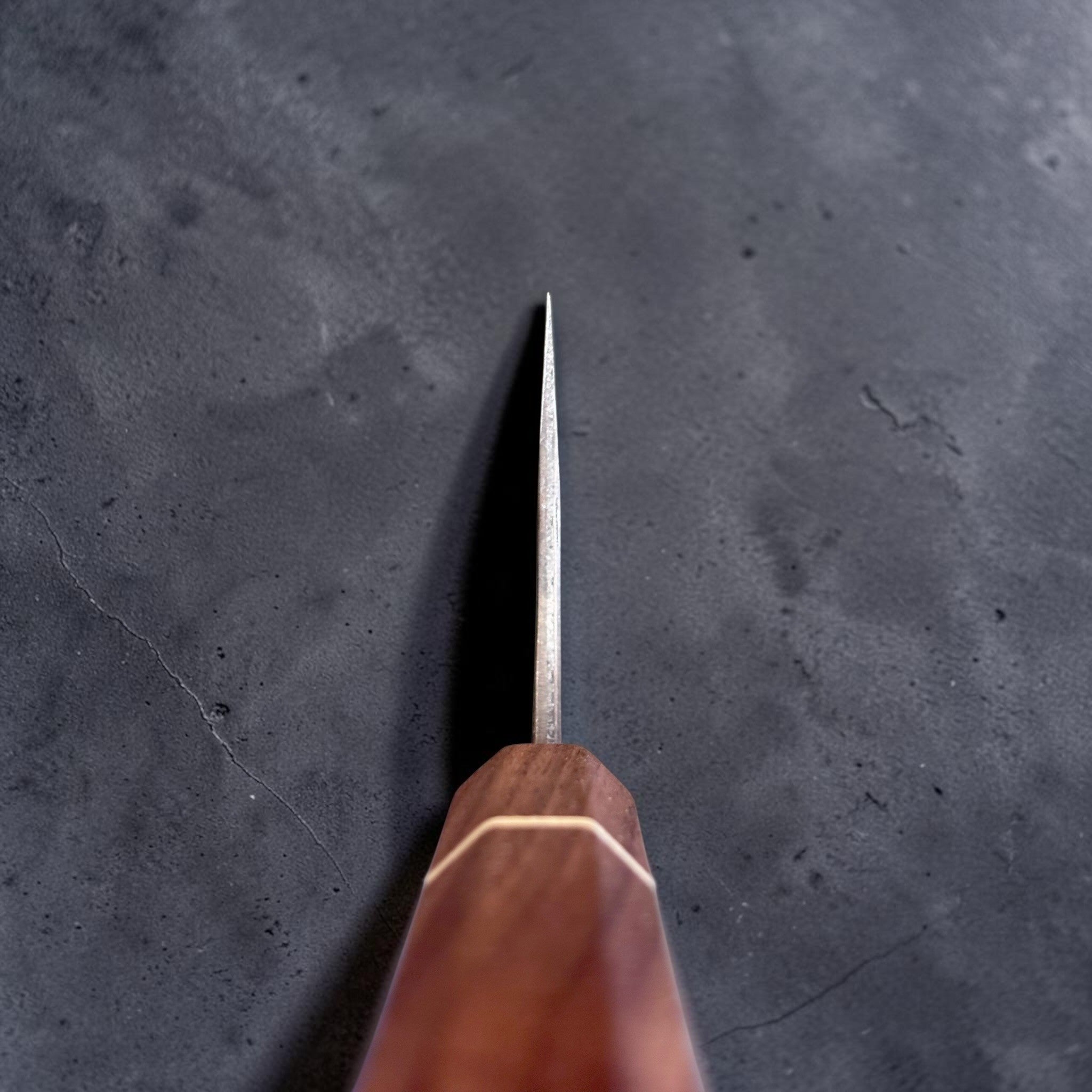
He wants an Imai knife to feel straightforward and easy to use while still revealing something distinctive—an intentionally sharpened character within the simplicity. The tip is particularly important to him, and he wants cooks to feel that difference in actual use.
What Defines an Imai Knife?
Imai prioritizes three qualities because he wants his knives to be used often: durability, cutting performance, and maintainability. He finishes the tip keenly for delicate work, but gives it a subtle curve to preserve strength.
- Purposeful tip geometry: Fine enough for precise work, with a small amount of curvature for durability.
- Practical performance: Designed for frequent use rather than display alone.
- Balanced ownership: Strong cutting performance with maintenance kept in mind.
- Visible handwork: Forging choices are made with the completed knife already in view.
Preferred Steel: Stainless-Clad Aogami Super
Imai’s favorite material is stainless-clad Aogami Super, often abbreviated as AS or Blue Super. It is not an easy material for a blacksmith, but he believes the extra work is worthwhile. The stainless cladding improves day-to-day maintenance, while the Aogami Super core allows him to carry responsibility for the knife through heat treatment and finishing.
The exposed carbon-steel edge is still reactive and should be washed and dried promptly. The stainless outer layers make the blade easier to live with than a fully reactive carbon-steel knife, while preserving the sharpening response and edge performance enthusiasts seek from Aogami Super.
Preferred Finish: Nashiji and the Evidence of Forging
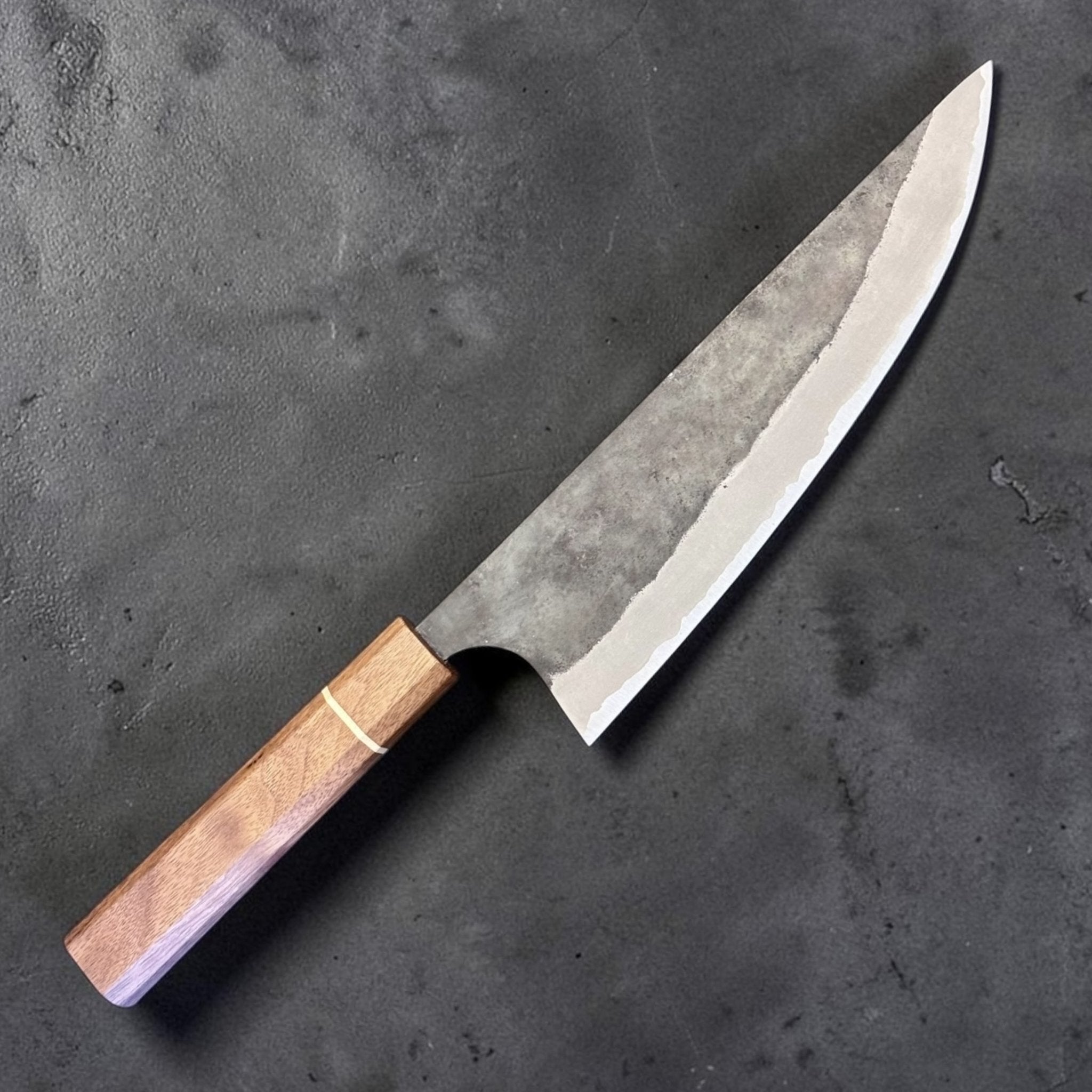
Imai favors a Nashiji finish that does not grind away too much of the blade’s surface. Because the knife is formed by striking iron while it is red hot, he wants the traces of that process to remain visible so the owner can sense how the steel moved under the hammer.
Those marks are not left carelessly. He works to make them as beautiful as possible, imagining the finished knife from the fire-forging stage onward. That makes the process deeply rewarding—and gives every hammer blow a degree of tension and responsibility.
The Most Demanding Part of Forging
The process that requires the most attention is not a single dramatic step but temperature control throughout production. Conditions change subtly with the seasons, so even years of experience do not allow a blacksmith to become careless.
The Story Behind the Imai USA Gyuto
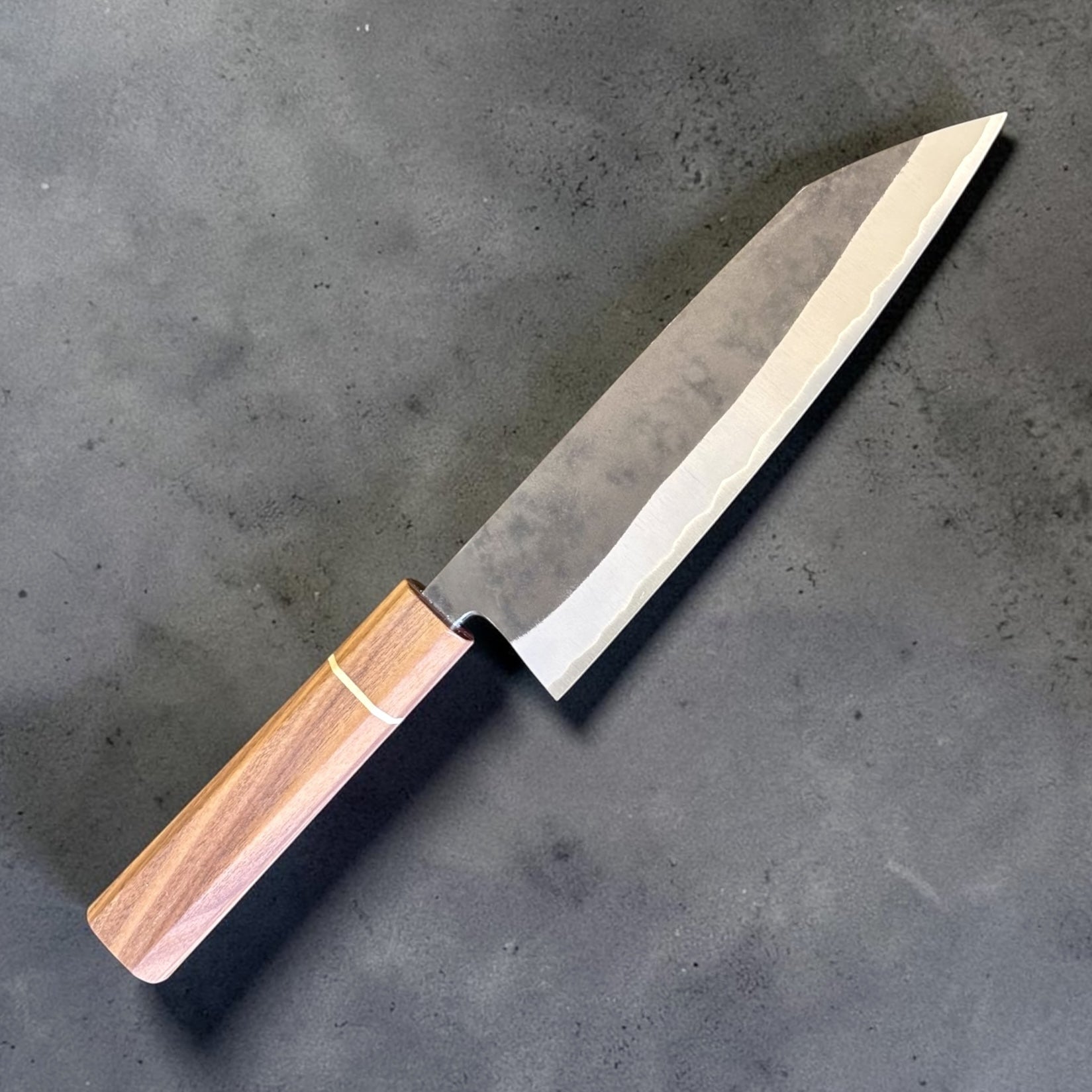
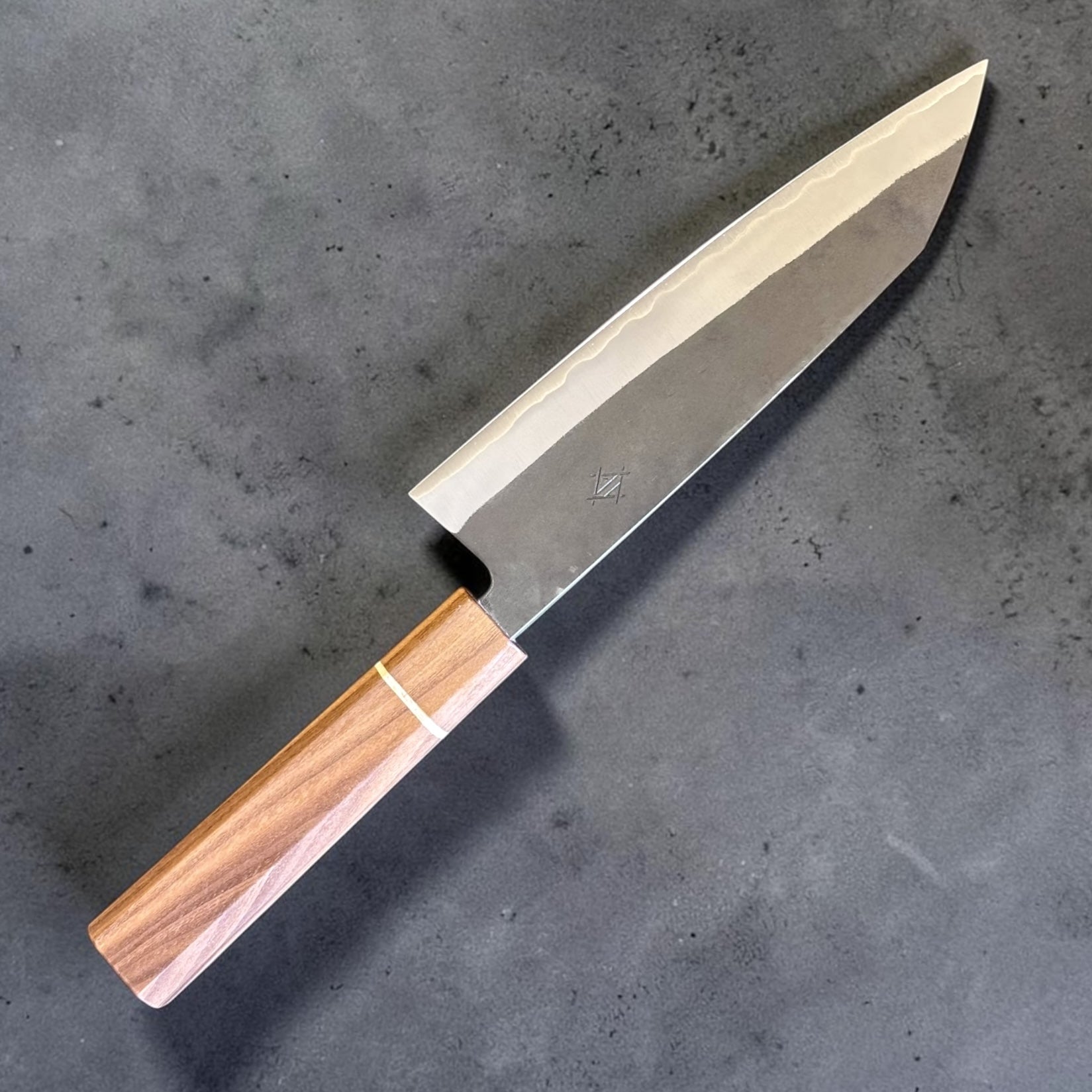
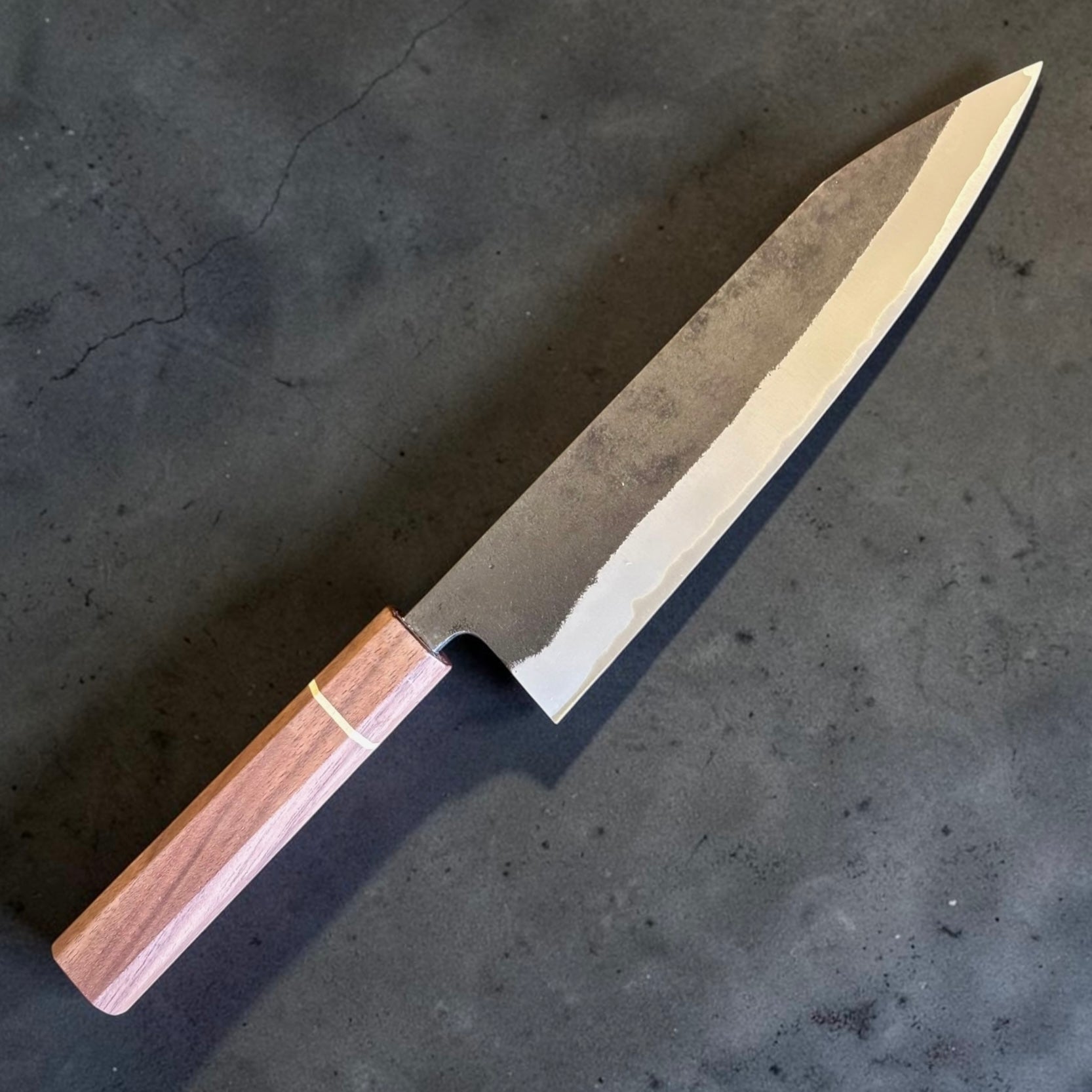
The knife Imai remembers most clearly is the USA Gyuto. When he was beginning to make knives under his own direction, he and his sharpening partner were unsure which path to take. One day, his partner suggested making a knife for cutting meat at a barbecue. Imai was delighted by the idea, designed it that same day, and immediately began production. American barbecue was also attracting attention on X at the time, and it looked extremely appealing to him.
Santoku and conventional gyuto shapes already have many established forms, so Imai deliberately chose to change the silhouette more boldly. The USA pattern asks a specific question: What would a knife made for overseas cooks look like when interpreted through Imai’s forging technique?
Rather than designing for a compact Japanese kitchen or smaller hands, he imagined a spacious kitchen and a physically larger cook using downward pressure from above. The result is a tall, confident gyuto with generous board presence and a character distinct from a conventional Japanese gyuto.
What Imai Wants Owners to Experience
Above all, Imai believes a kitchen knife must cut well. Every knife is carefully forged and finished by hand, and that performance also makes it a precise tool rather than an indestructible one. He hopes overseas customers will understand that sensitivity as part of the value of Japanese handwork.
“I want you to feel something distinctive within its simple ease of use—especially at the tip.”
Care Advice Directly from Shotaro Imai
- Do not cut frozen food or fish bones. Hard ingredients can chip or damage the fine edge.
- Dry the knife immediately after washing. The exposed carbon-steel edge can rust if left wet.
- Never use a dishwasher. Heat, detergent, and moisture can damage the handle and the blade.
- Hand wash only. Use mild soap, then dry the blade and handle thoroughly.
What Does Shotaro Imai Like to Cook?
Imai modestly says he is not sure it counts as cooking, but he enjoys chopping cucumbers and napa cabbage to make pickles. For him, cutting those vegetables is one of the clearest ways to feel a knife’s sharpness.
What Comes Next?
Imai is not pursuing a dramatic change in shape simply for novelty. His goal is quieter and more demanding: to continue making each knife even slightly better than the one before it.
Frequently Asked Questions
Who is Shotaro Imai?
Shotaro Imai is a Japanese kitchen-knife blacksmith working in the forge at Kamo To Uchi Hamono Co., Ltd. in Fukui Prefecture. He has 13 years of experience in the knife industry.
What steel does Shotaro Imai prefer?
His favorite is stainless-clad Aogami Super, which combines a high-performance carbon-steel core with easier-maintenance stainless outer layers.
What is special about an Imai knife?
Imai emphasizes cutting performance, durability, maintainability, and precise tip work. His knives are intended to feel simple and intuitive while retaining a distinctive edge and forged character.
What is the Imai USA Gyuto?
It is Imai’s interpretation of a gyuto for overseas cooks and larger workspaces, inspired by American barbecue. Its taller, more assertive geometry differs from a conventional Japanese gyuto.
How should I care for an Imai knife?
Hand wash it, dry it immediately, and never use it on frozen food, bones, glass, stone, or ceramic. Do not place it in a dishwasher.
Explore the Shotaro Imai knives currently available from Tokushu Knife below. This collection updates automatically as new Imai knives are added.