
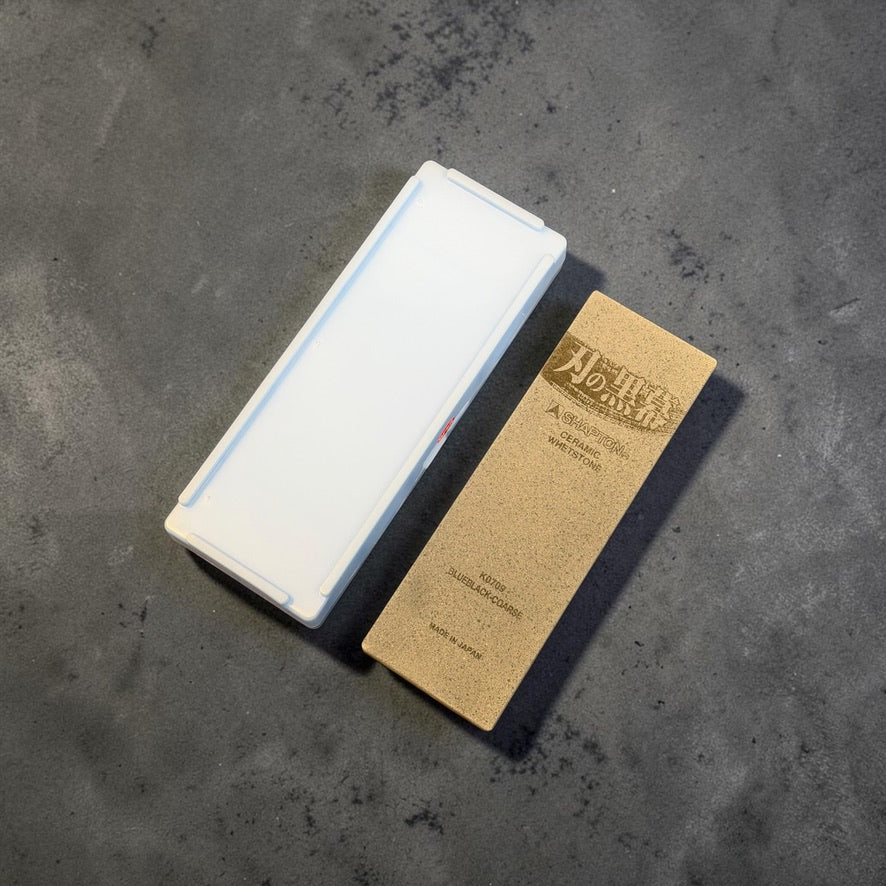
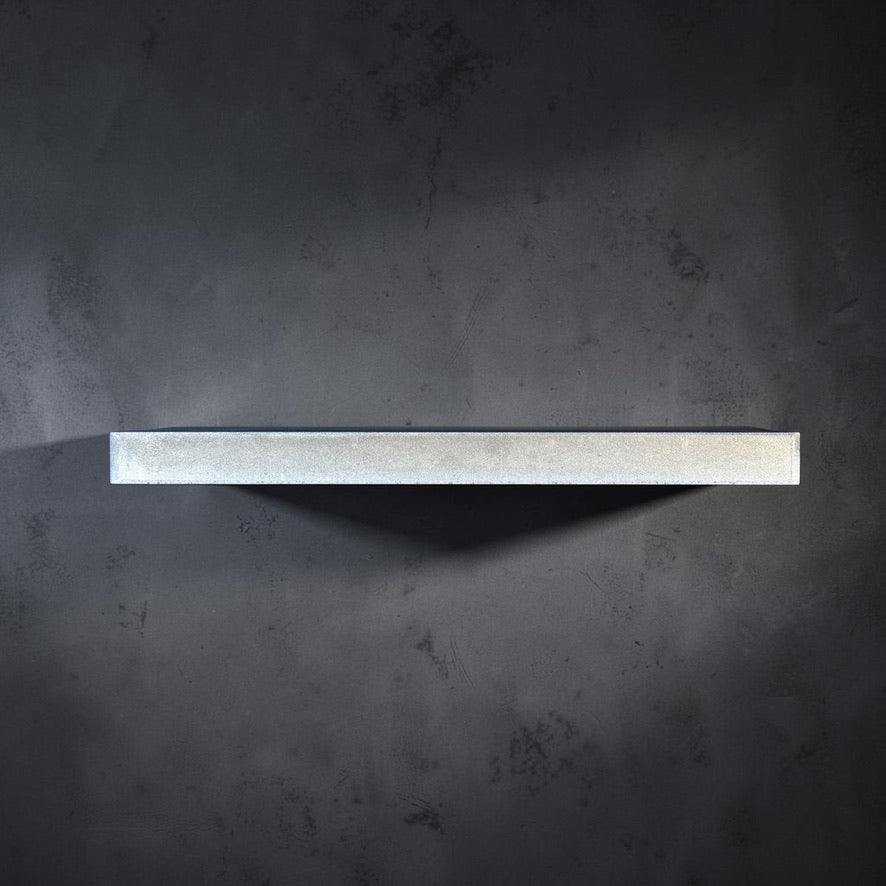
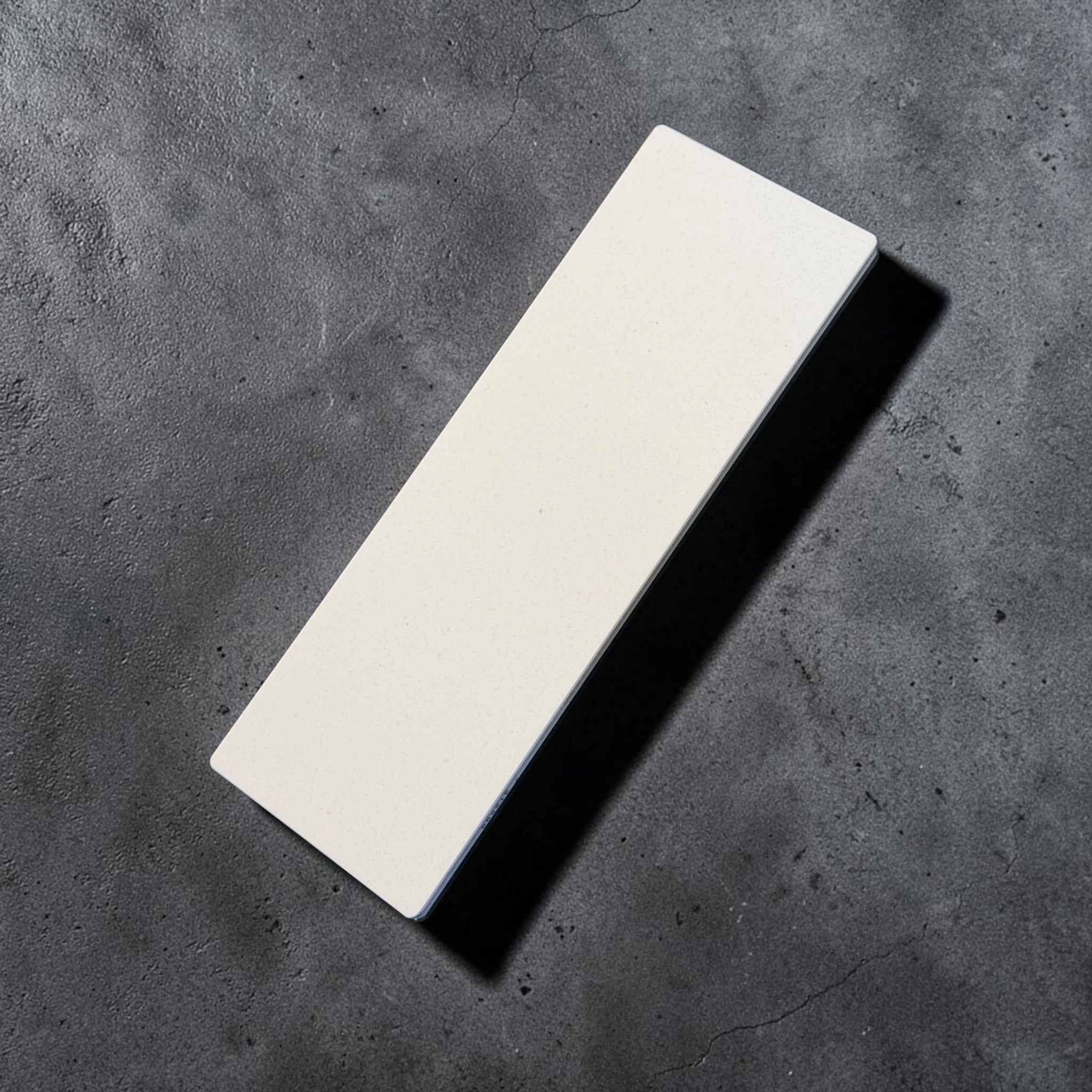
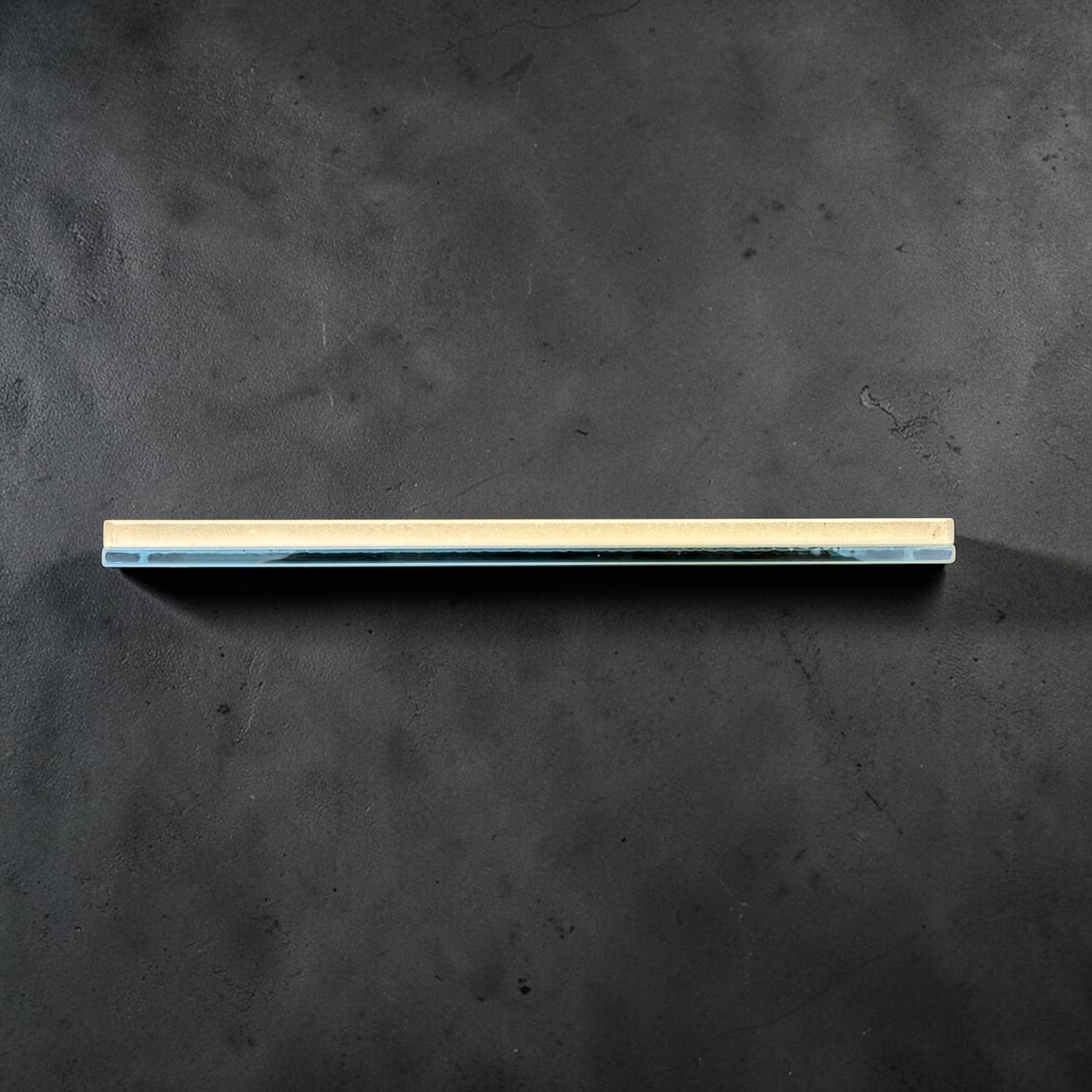
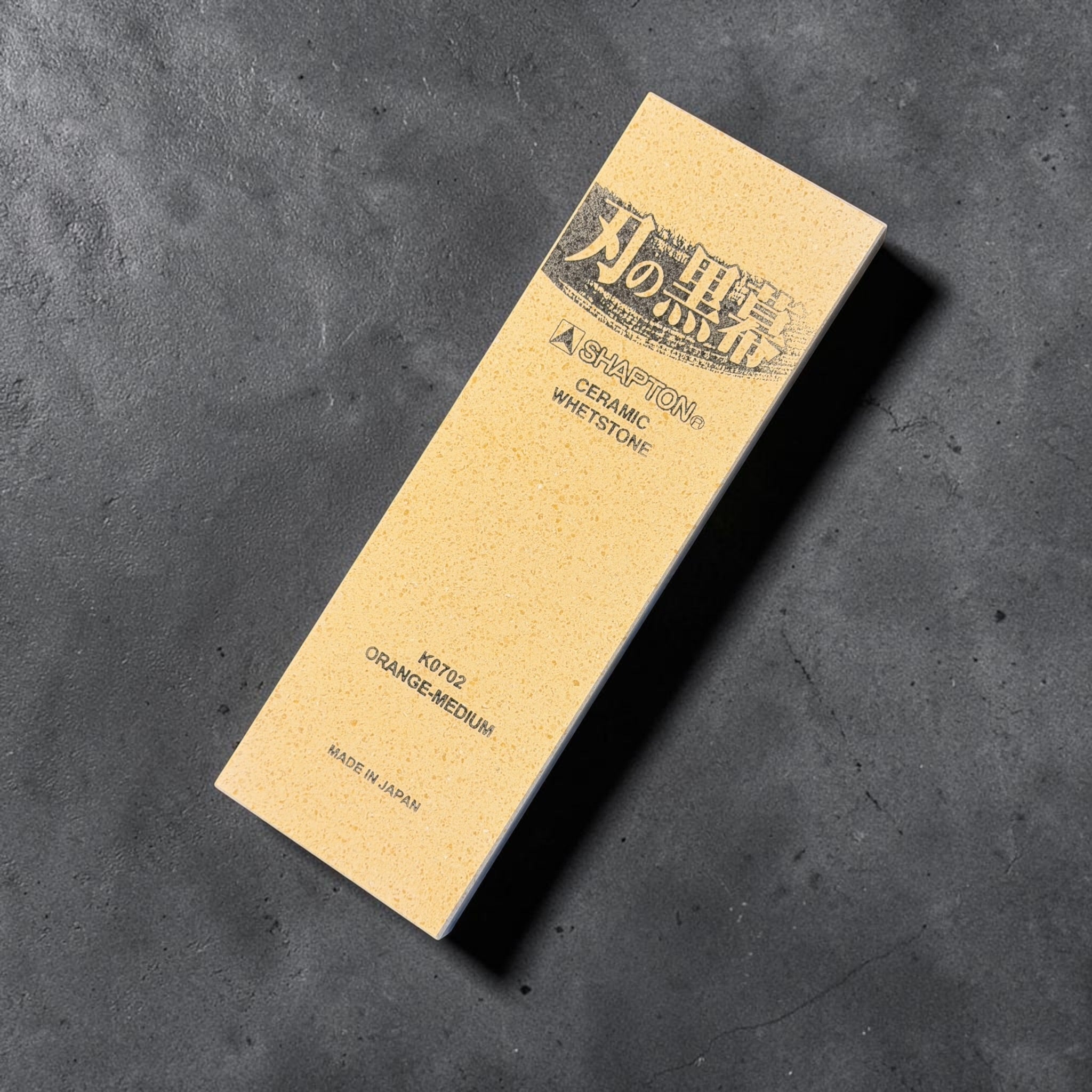
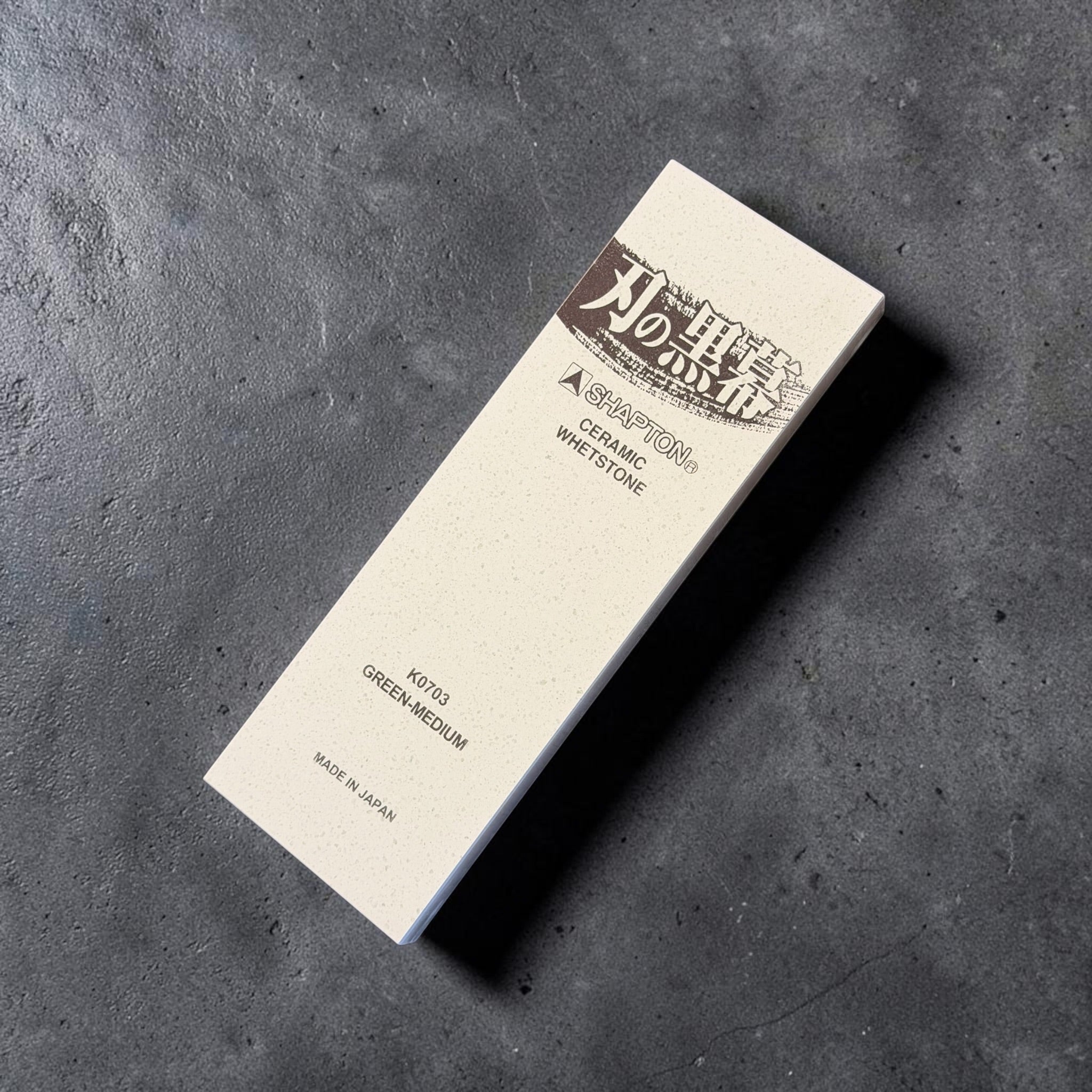
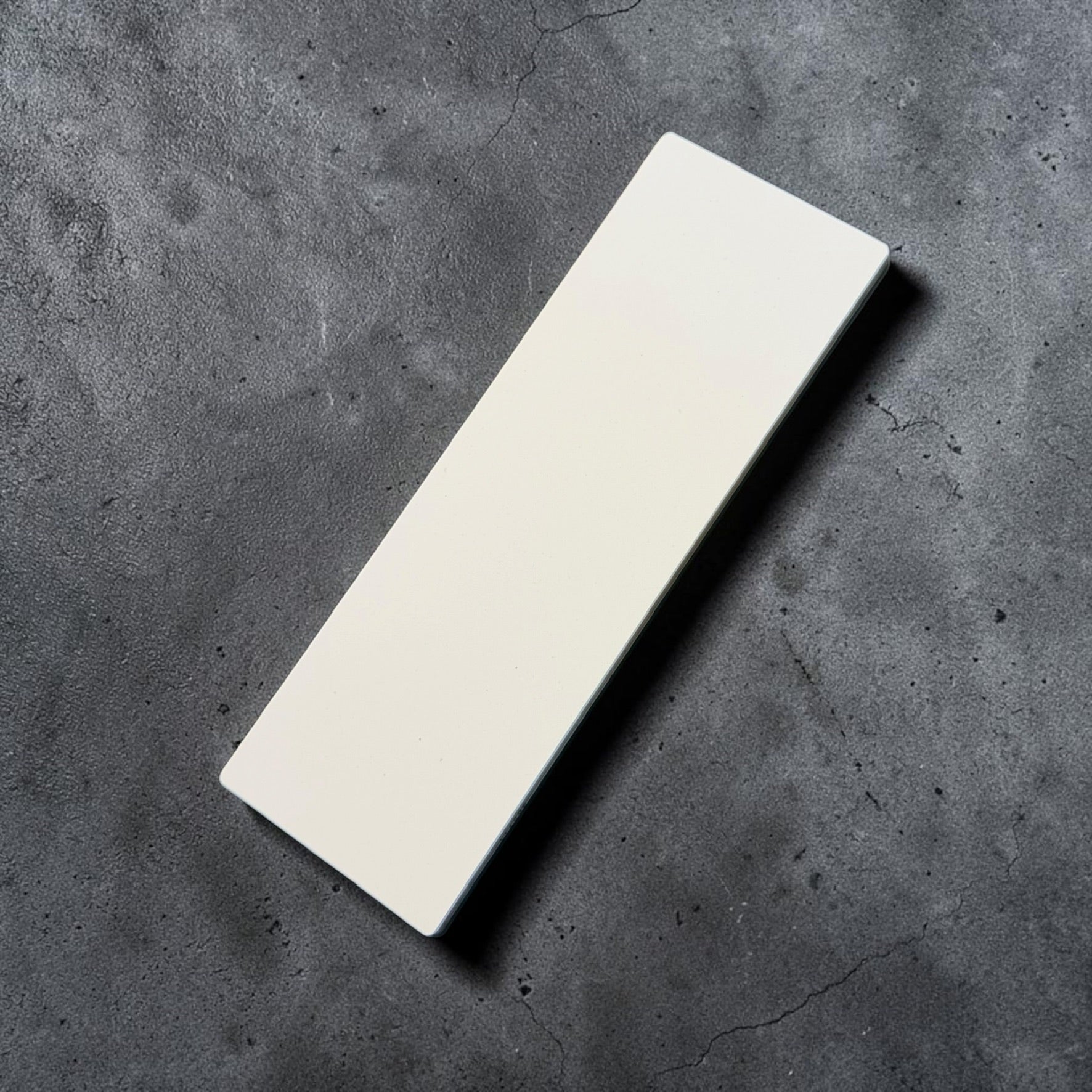
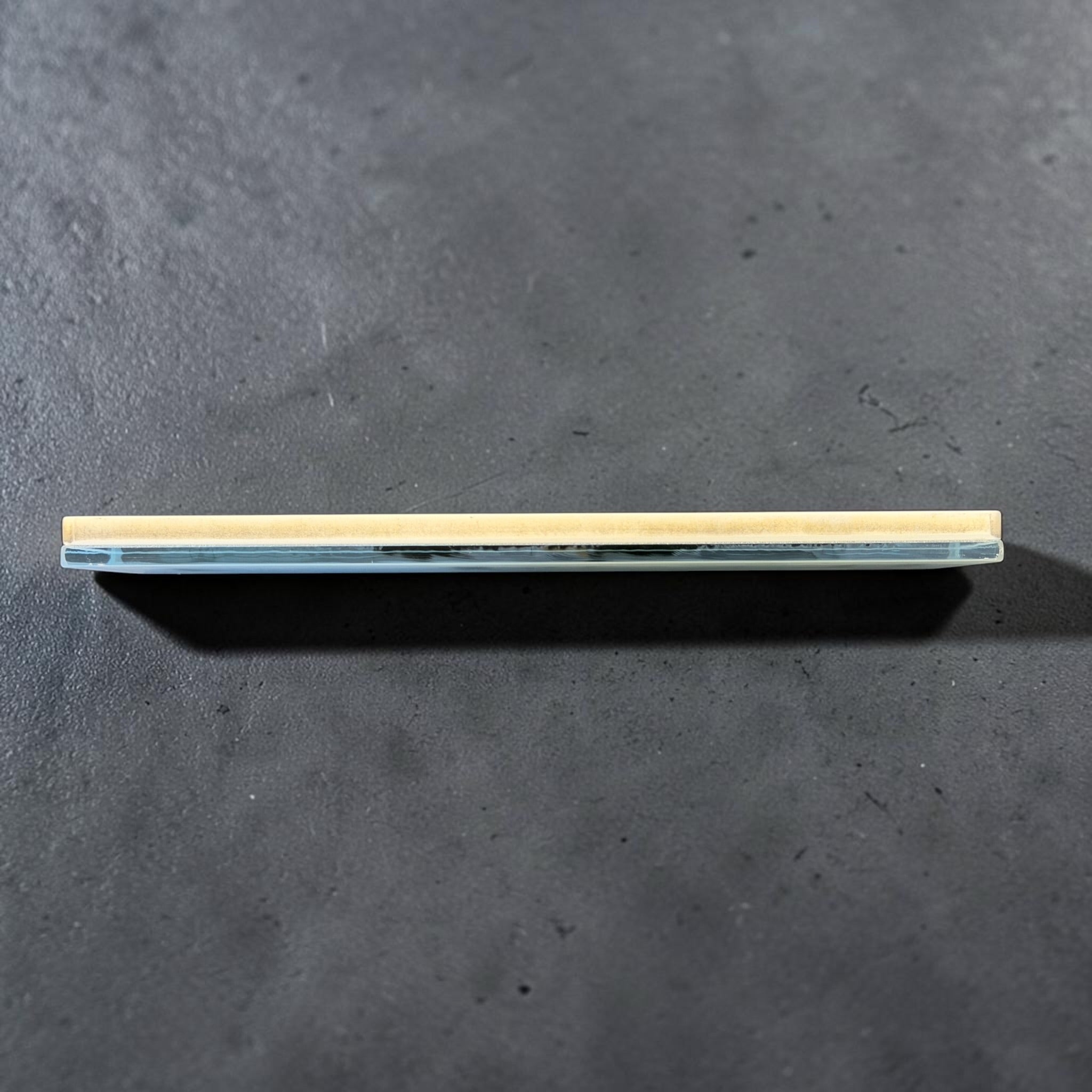
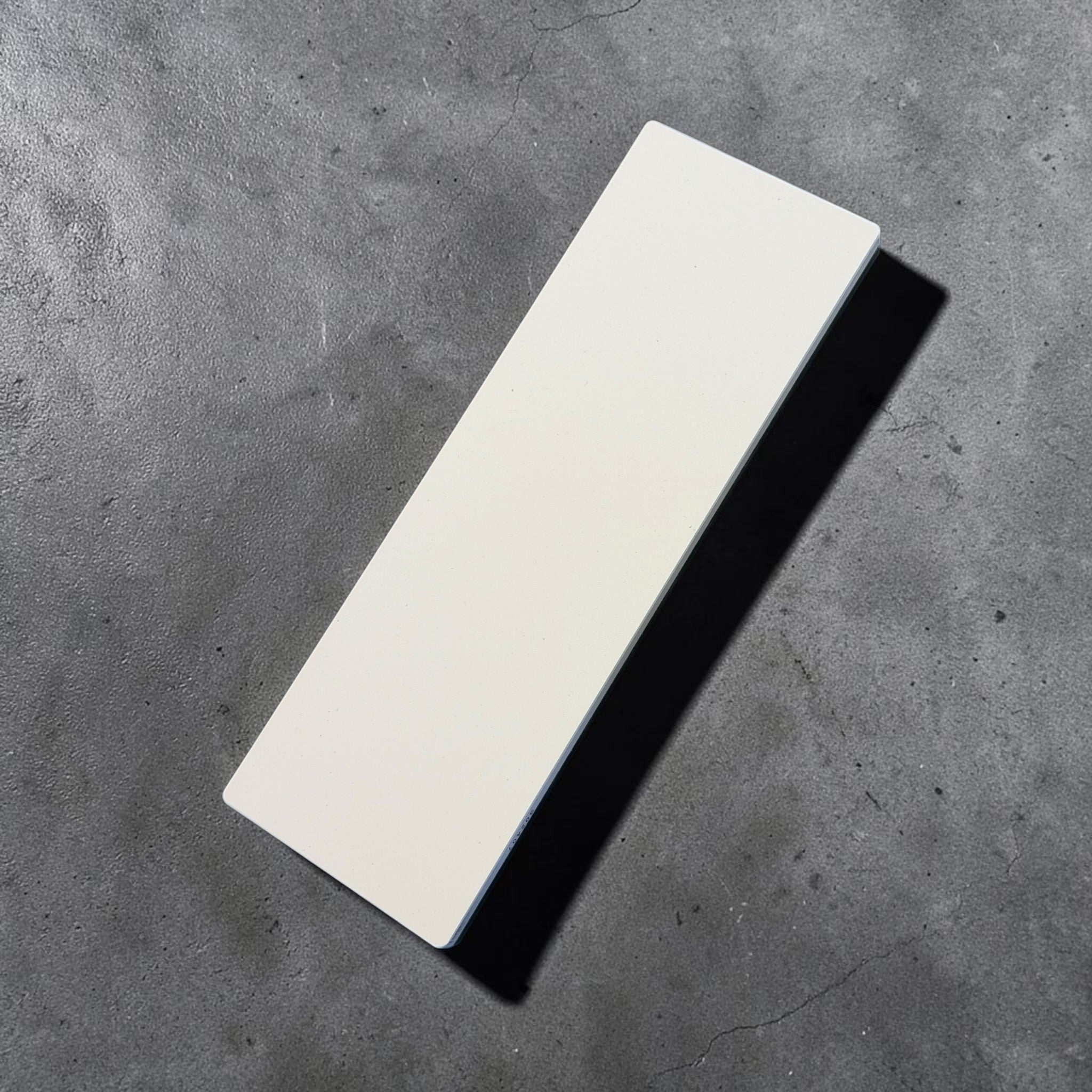
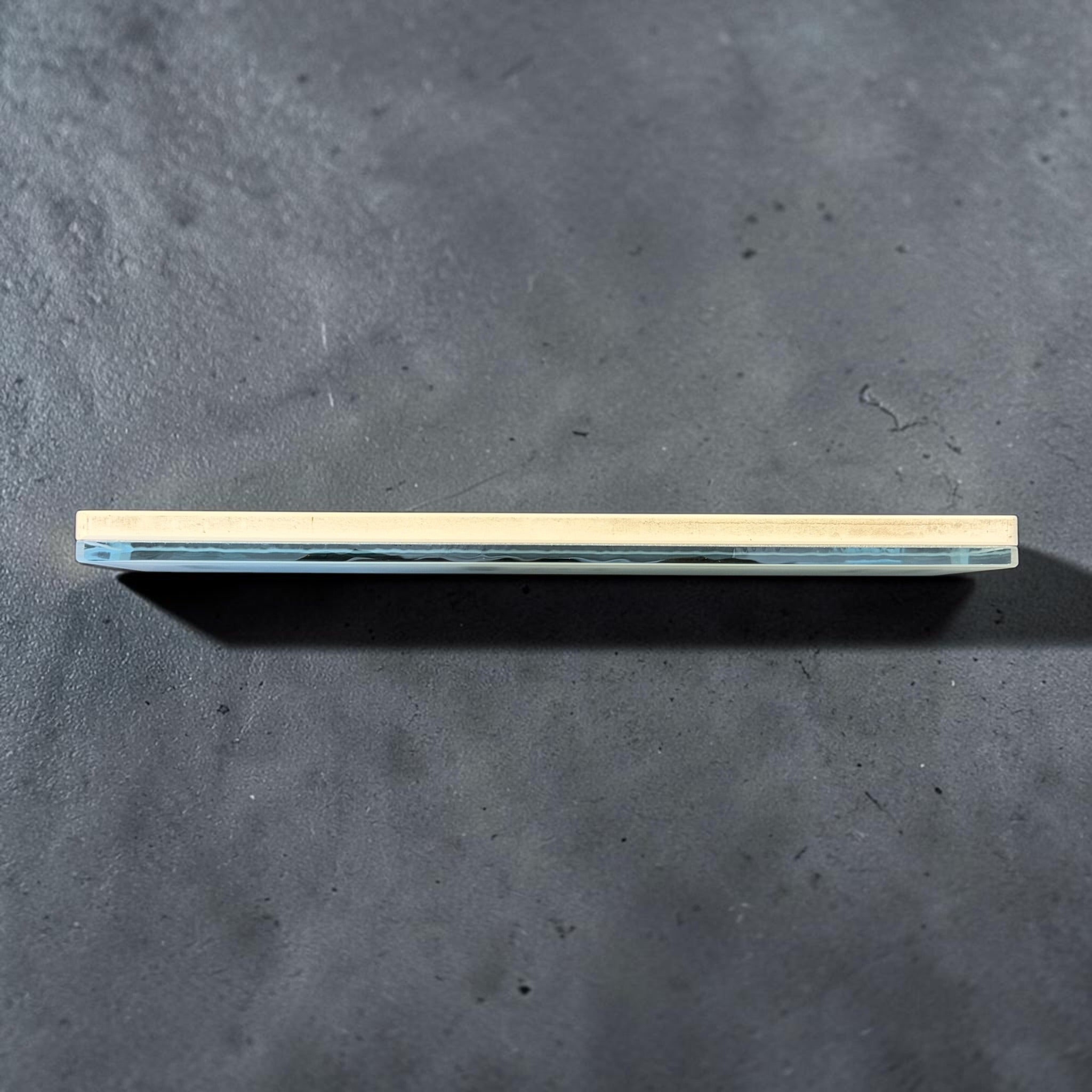
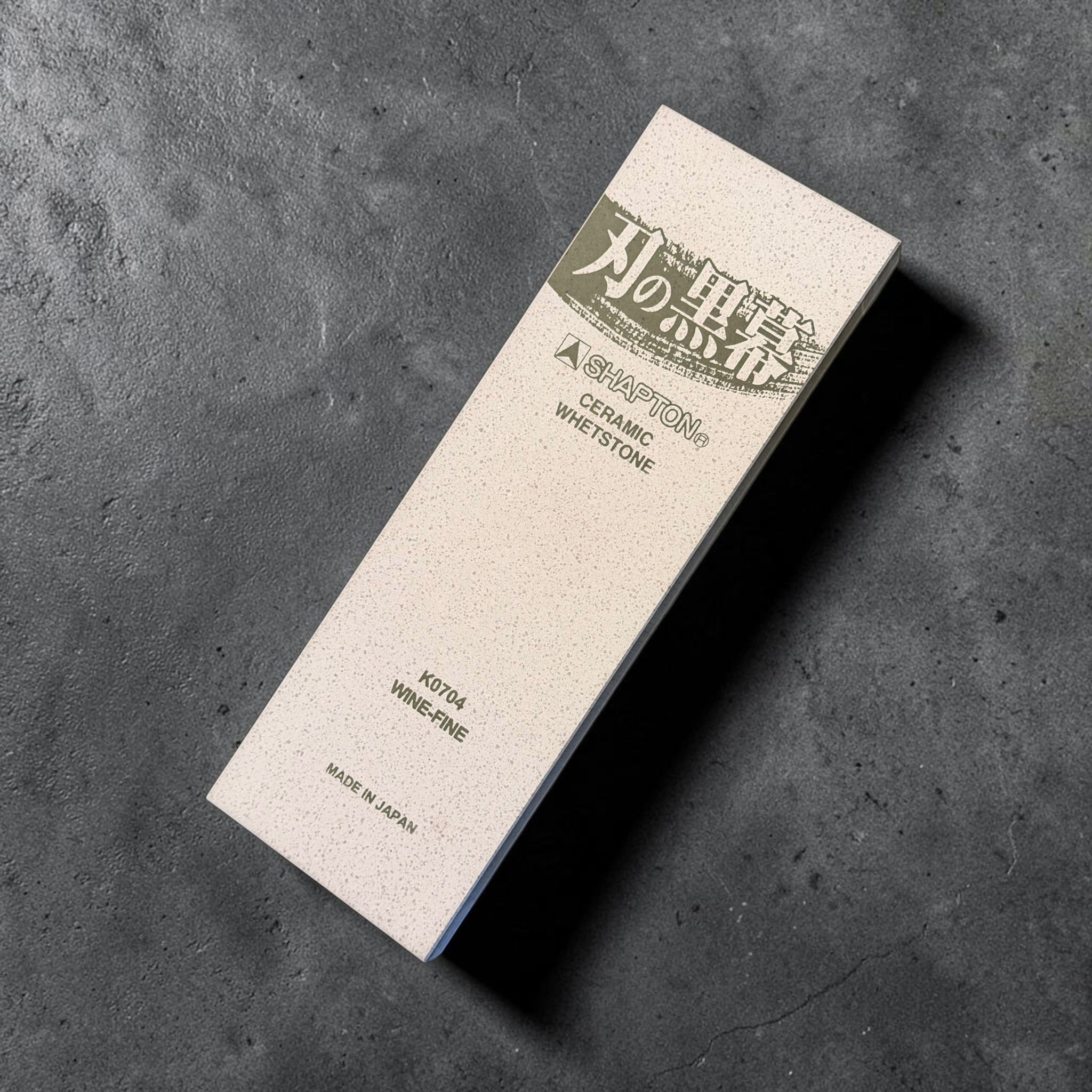
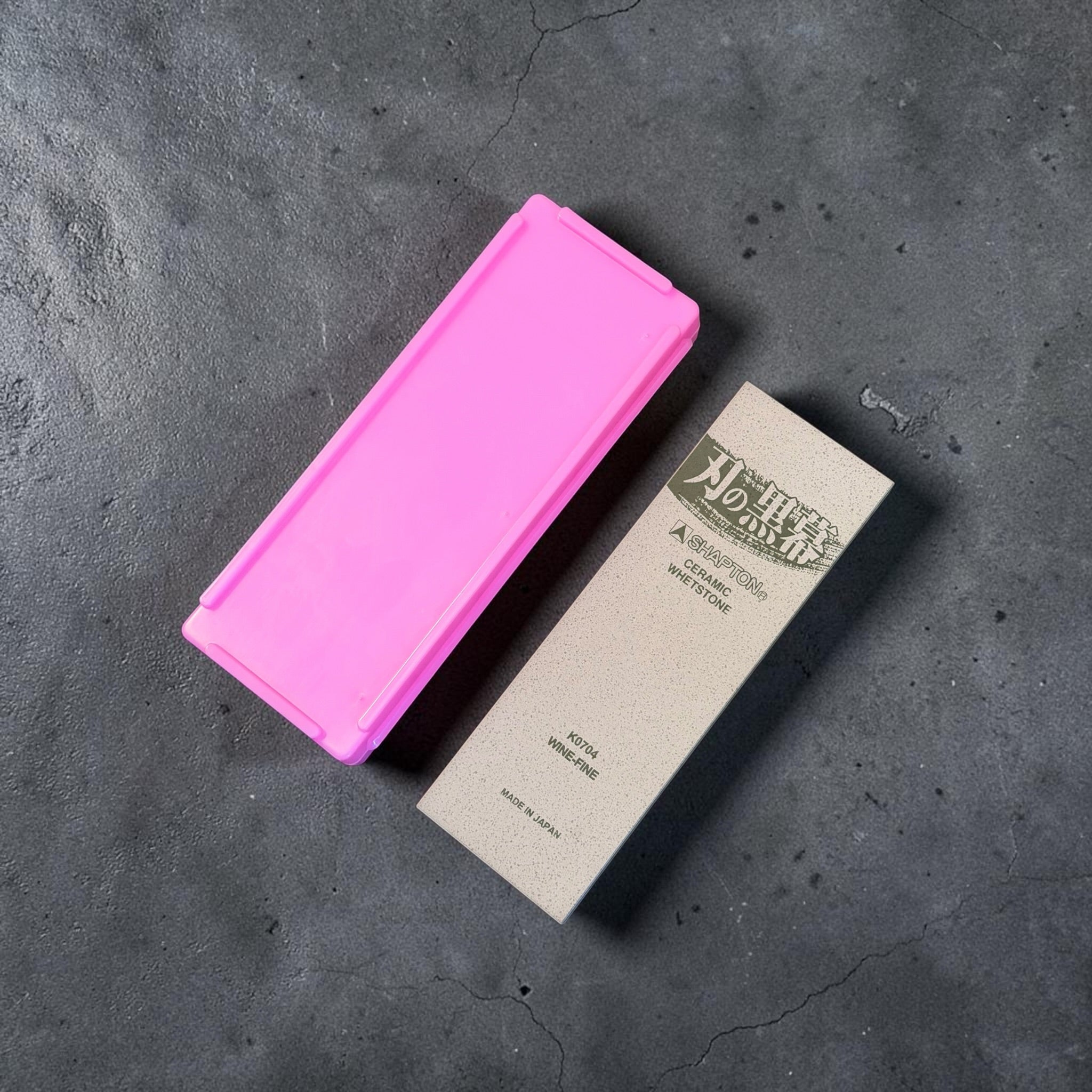
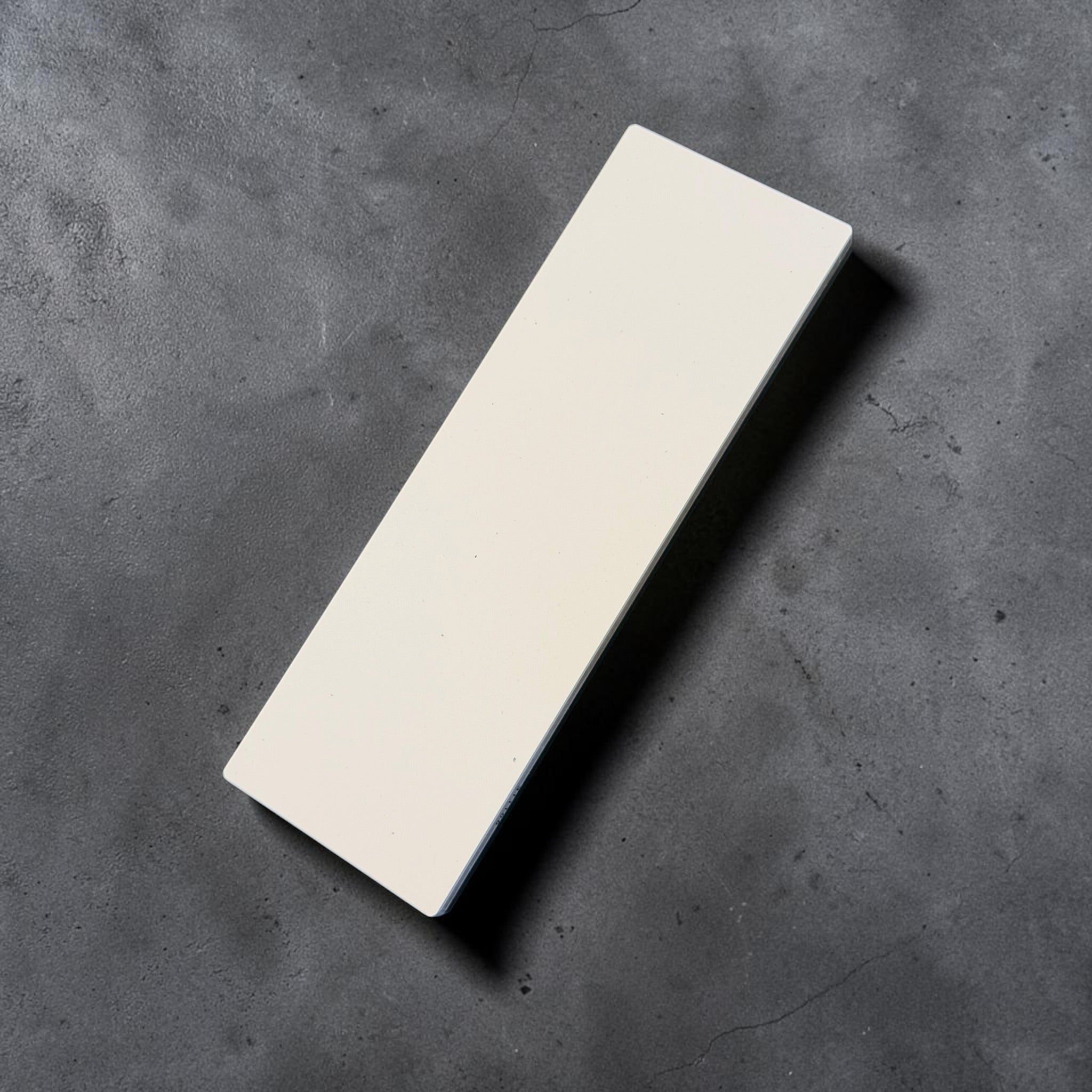
Shapton whetstones are made in Japan for sharpeners who want fast cutting, low wear, and true splash-and-go convenience. This collection brings together two of Shapton’s most respected full-size waterstone systems: solid 15 mm KUROMAKU ceramic stones and precision GlassStone models laminated to tempered glass.
Choose the right Shapton stone
- 320–500 grit: repair and geometry. Remove small chips, correct rolled edges, reset bevels, and create a clean foundation for sharpening.
- 1000 grit: core sharpening. Restore a dull but undamaged knife and establish a crisp everyday working edge.
- 2000 grit: refinement and maintenance. Clean up medium-grit scratches, refine the burr, and preserve useful kitchen-edge bite.
- 4000–5000 grit: fine finishing. Smooth the scratch pattern and create a controlled, polished edge.
- 8000 grit: high polish. Refine an already sharp edge after a fine stone; it is not intended for initial repair.
KUROMAKU vs. GlassStone
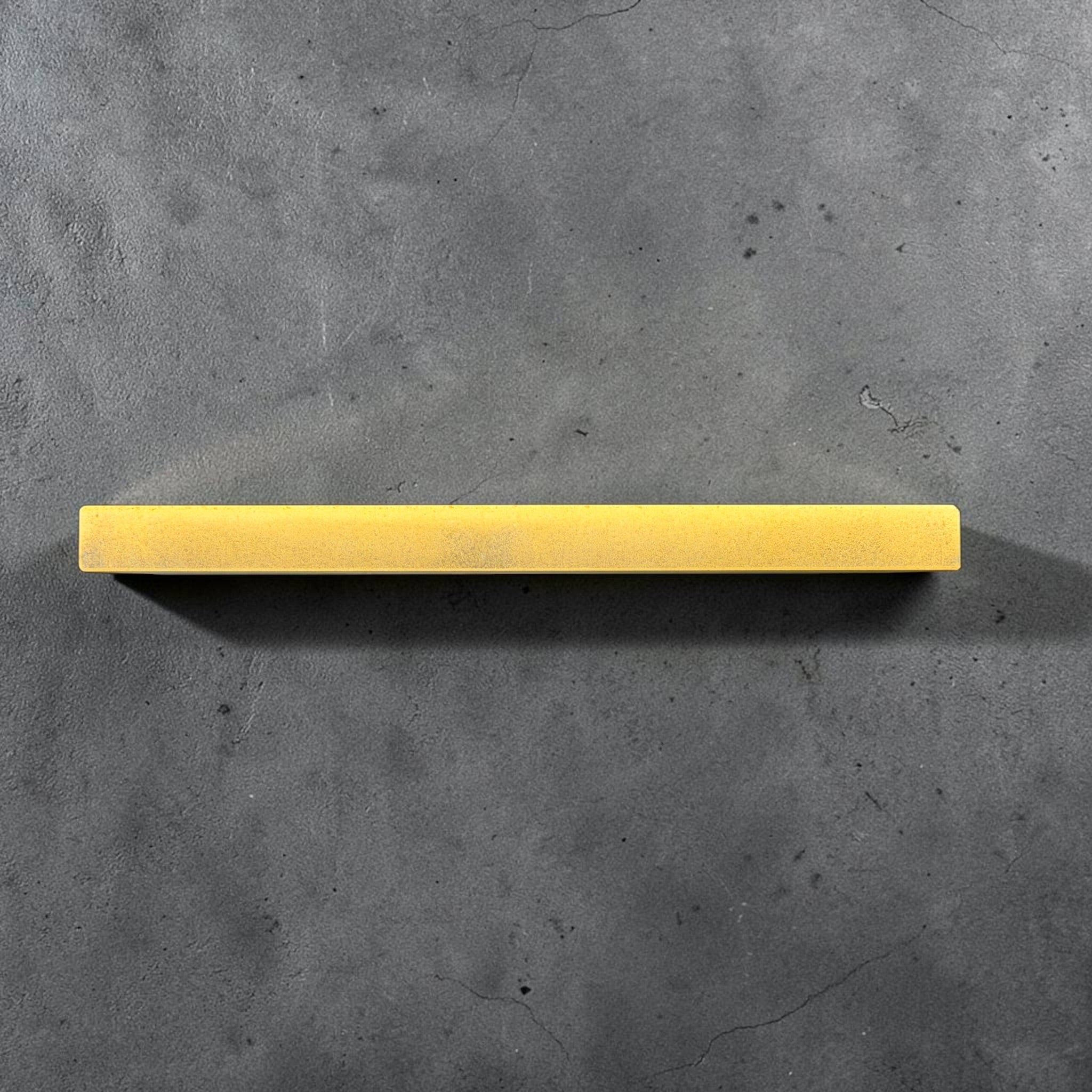
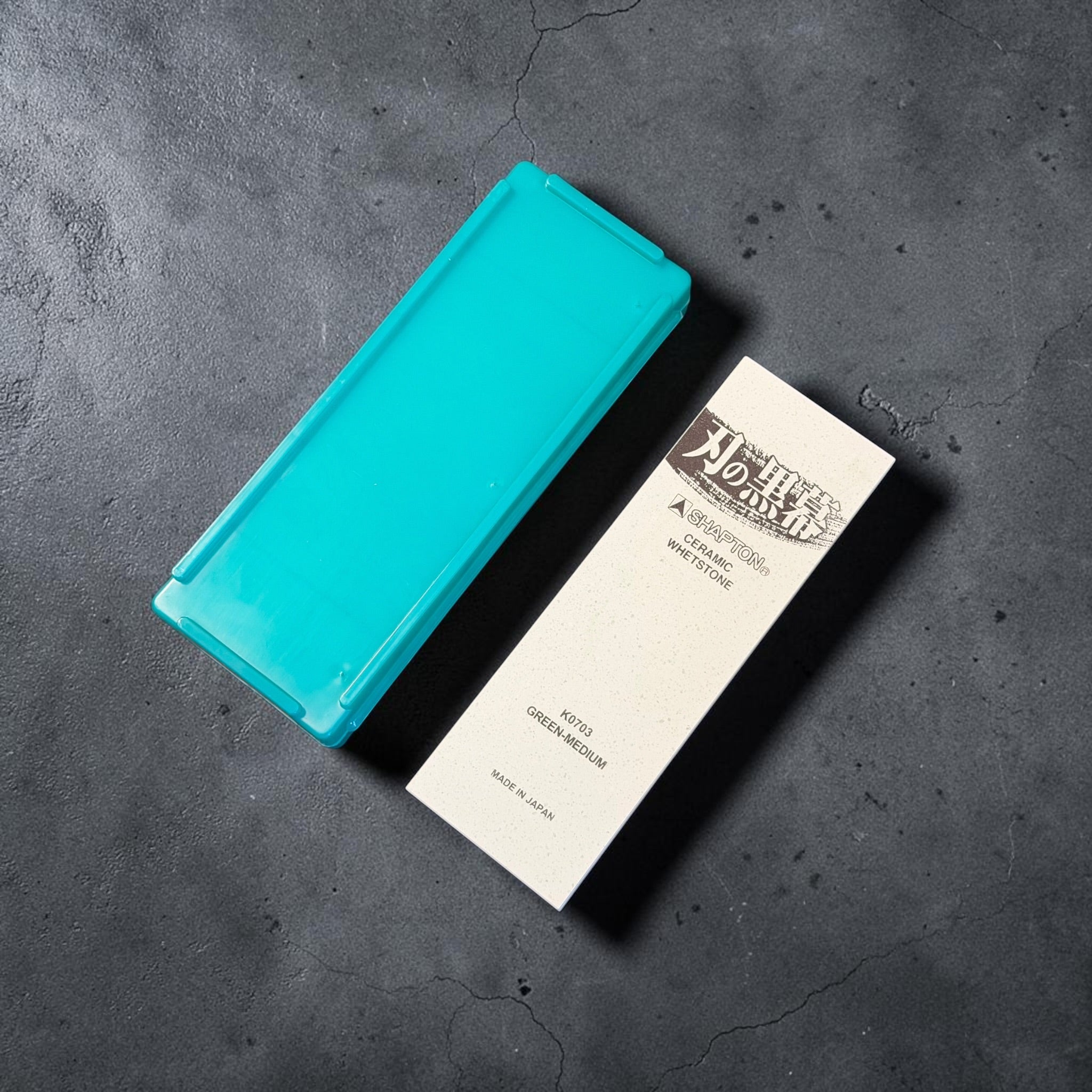
KUROMAKU, also called Ha-No-Kuromaku, Shapton Professional, or Shapton Pro, is the classic color-coded line. Each stone is a solid 210 × 70 × 15 mm ceramic waterstone and includes a ventilated case that doubles as a sharpening base. Choose KUROMAKU when you want maximum stone thickness, an included holder, and a straightforward progression from repair through finishing.
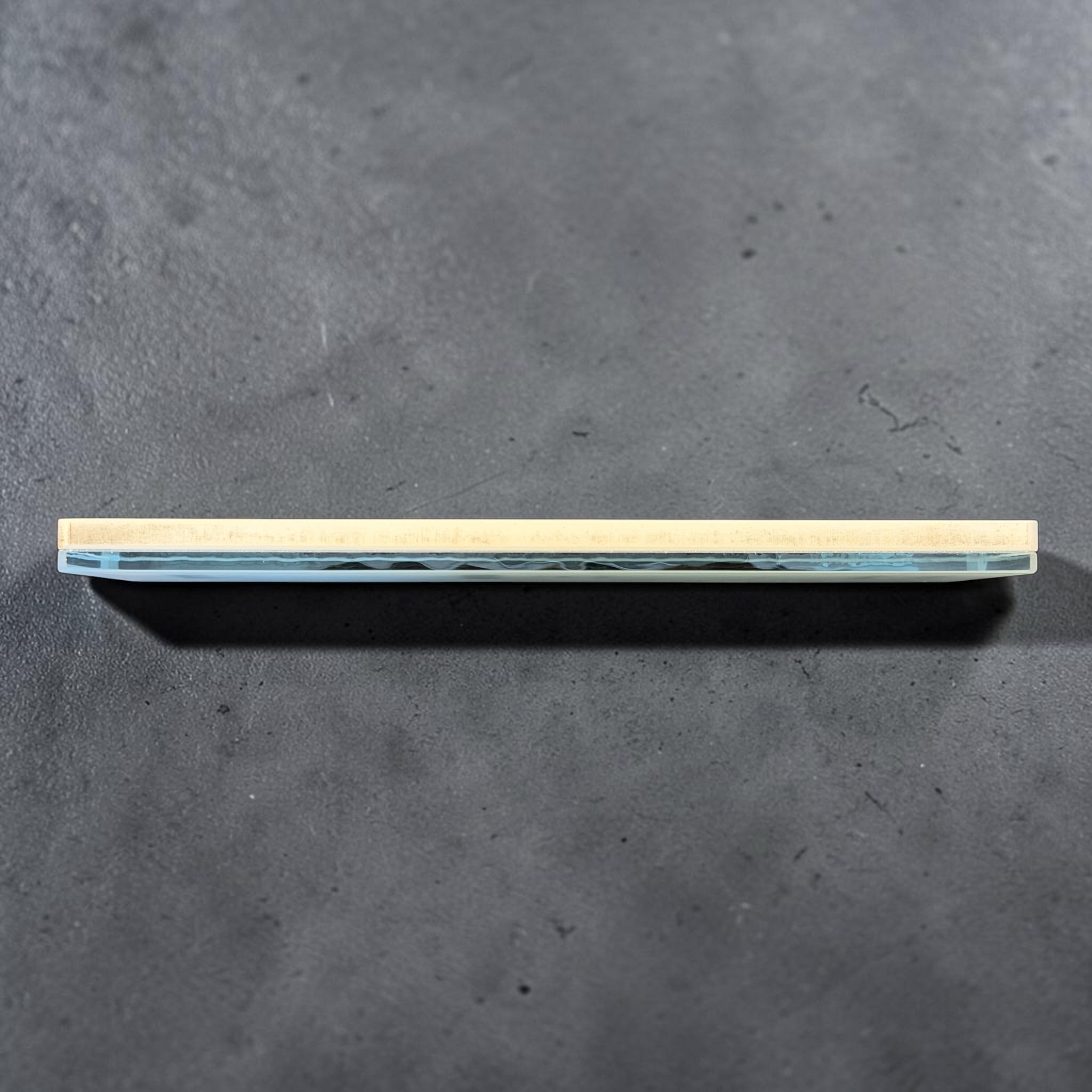
GlassStone uses a 5 mm abrasive layer permanently laminated to a 5 mm tempered-glass base. The result is a thin, stable, full-size 210 × 70 mm stone with precise feedback. The models here are Type WA white-alumina stones in 500, 2000, 4000, and 8000 grit—not GlassStone Seven, RockStar, or HC variants.
A practical progression
For most kitchen knives, start with 1000 grit and add 2000 or 4000–5000 grit when you want more refinement. Keep a 320 or 500 stone for repair and bevel work. Add 8000 only when your knives and cutting style benefit from a highly polished finish. You do not need every grit: select the smallest progression that matches the condition of the edge and the finish you want.
Use and care
Add clean water and begin sharpening—no long soak is required. Maintain a consistent angle, use controlled pressure, and flatten the working surface periodically. After sharpening, rinse the stone, remove standing water, and let it air-dry completely at room temperature before storage. Avoid detergent, hot water, direct sun, forced heat, and long-term soaking.