
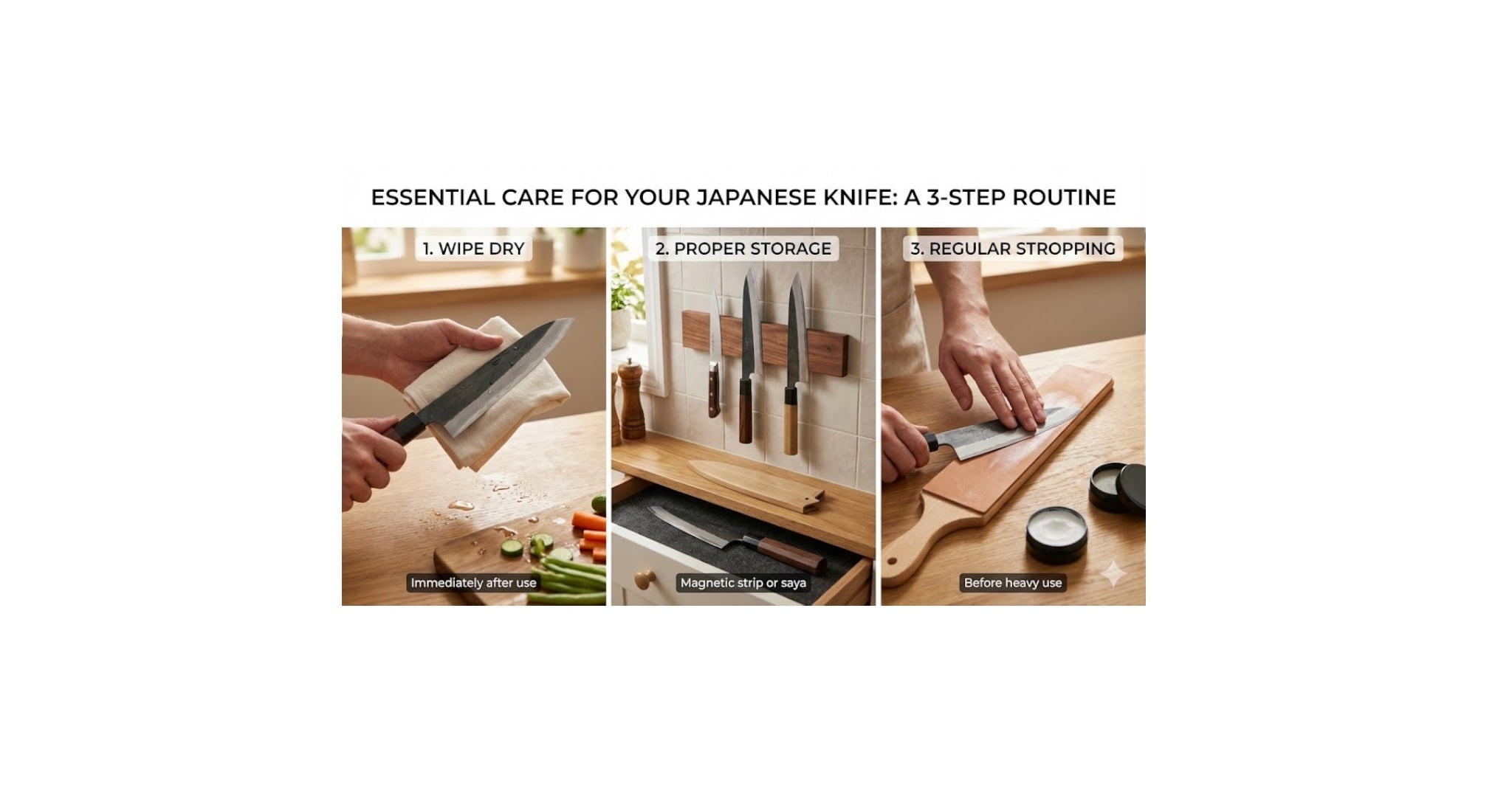
Essential Care for Your Japanese Knife: A 3-Step Routine (Video Guide)
You’ve invested in a piece of Japanese craftsmanship—maybe a razor-sharp Moritaka or a laser-thin Takamura. But how do you ensure it lasts a lifetime?
Many people are intimidated by "high carbon" steel, fearing it will rust overnight. The truth is, maintaining a Japanese knife doesn't require a degree in metallurgy. It just requires a simple routine.
In this video collaboration with Franki Alo, we break down the three essential habits that will keep your blade pristine, sharp, and rust-free.
1. The Golden Rule: Wipe It Dry
The number one enemy of Japanese steel—especially carbon steel—is moisture. Unlike the stainless steel knives you might be used to, high-carbon blades can develop rust if left wet for even a few minutes.
- The Routine: Keep a dedicated "knife towel" on your cutting board.
- The Technique: After cutting acidic foods (like lemons, onions, or tomatoes), give the blade a quick wipe immediately.
- The Safety Tip: Always wipe from the spine (the back) toward the edge, or lay the towel flat and wipe the blade across it. Never run your hand down the sharp edge.
Note: If you do see a change in color on the blade, don’t panic! That is likely a "patina"—a natural protective layer that forms on carbon steel. Rust is orange/red and rough; patina is grey/blue and smooth.
2. Storage: Respect the Edge
Never, ever throw your Japanese knife into a loose drawer. The hard steel is brittle, meaning it can chip if it bangs against other metal utensils.
Recommended Storage Solutions:
- Magnetic Knife Strip: Our favorite method. It keeps the knife dry, displays the beautiful steel, and prevents the edge from touching anything.
- Knife Block: A classic choice, but ensure the slots are wide enough so the blade doesn't bind.
- Blade Guard (Saya): If you must store your knife in a drawer, use a wooden Saya or a felt-lined plastic guard. This protects both the edge and your fingers.
3. Maintenance: Stropping vs. Honing
You don't need to use a whetstone every week. To keep that "screaming sharp" edge between sharpening sessions, we recommend stropping.
- Why Strop? A leather strop realigns the microscopic "teeth" of the edge without removing significant metal. It’s gentler than a steel honing rod, which can be too aggressive for hard Japanese steel.
- How often? You can strop your knife before every heavy cooking session. It takes 30 seconds and keeps the knife feeling brand new for months.
Need to fix a rusty knife?
If you missed a wipe and found some orange spots, don't worry. Check out Part 2 of our series here where we cover how to remove rust and force a patina.
Shop the Gear:


Leave a comment
This site is protected by hCaptcha and the hCaptcha Privacy Policy and Terms of Service apply.